Why the 2026 Football World Cup Rewrites Travel
The 2026 FIFA World Cup will transform the tournament into a 48-team, three-country event across Canada, Mexico, and the United States, with Los Angeles hosting eight matches at SoFi Stadium. The comp...
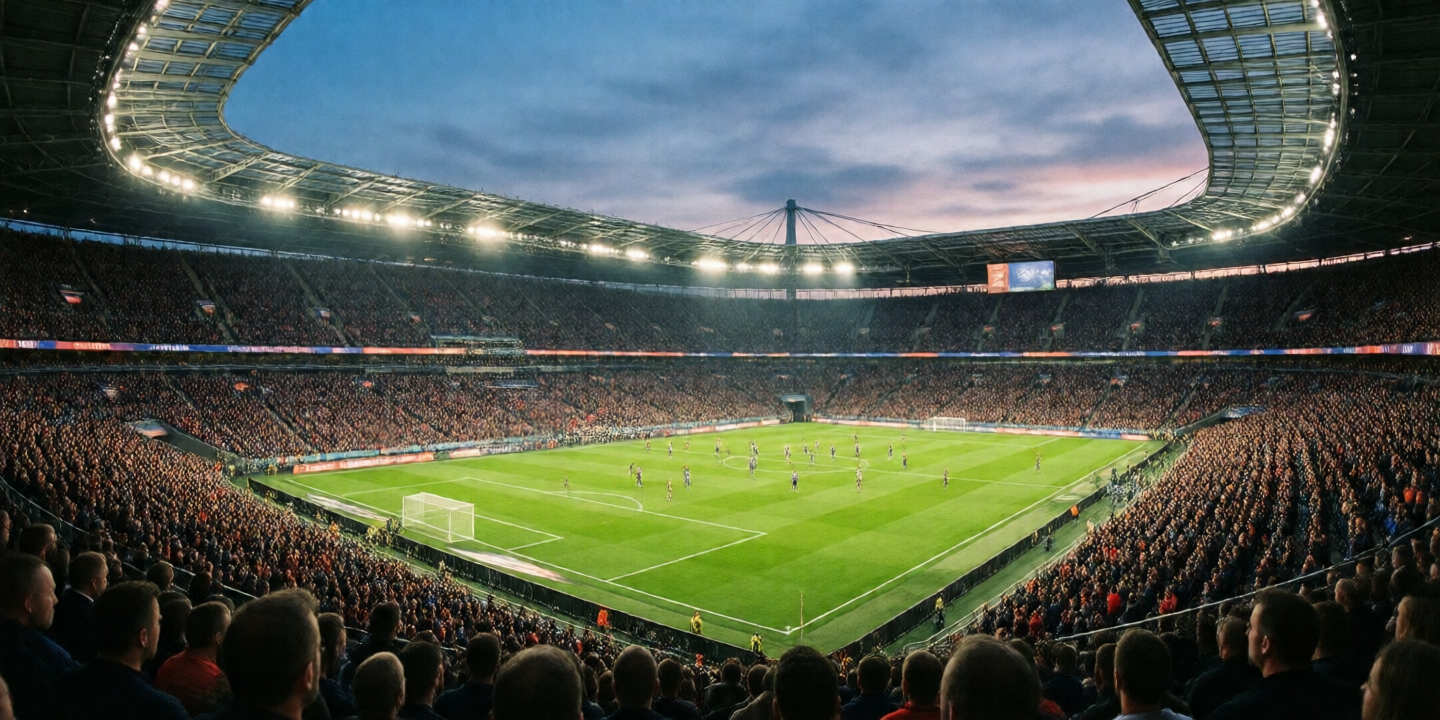
Why the 2026 Football World Cup Rewrites Travel
The 2026 FIFA World Cup will transform the tournament into a 48-team, three-country event across Canada, Mexico, and the United States, with Los Angeles hosting eight matches at SoFi Stadium. The competition runs from June 11 to July 19, 2026, while the Los Angeles program adds 39 days of fan celebrations and FIFA Fan Festival activity at the LA Memorial Coliseum. Fan Strategy tracks the football world cup through match predictions, team tactics, player statistics, scheduling effects, and responsible tournament analysis rather than recycled hype dressed up as expertise. The expanded format creates more matches, longer travel routes, and new opportunities for underdogs, but it also makes rest, altitude, heat, and squad rotation unusually important. Start by checking official fixtures and host-city information, then compare team form with travel and venue conditions before making any prediction.

Photo by Aleksandr Neplokhov on Pexels
The 2026 football world cup is not merely a larger edition of the familiar tournament. It is a logistical stress test wearing a national-team jersey, which is a very expensive way to discover that geography exists. Thirty-two teams have become 48, the opening match is scheduled for June 11 in Mexico City, and the final is planned for July 19 at MetLife Stadium in New Jersey. The official FIFA World Cup 2026 tournament page remains the proper reference for confirmed fixtures, venues, and competition information.
Fan Strategy follows the event with a focus on evidence: expected line-ups, tactical matchups, player availability, qualifying form, and the effect of congested travel. Readers interested in prediction markets or football betting should treat analysis as information, not a guarantee of profit. Gambling can lose money quickly, and no model turns uncertainty into a magic money printer, despite what the loudest tipster on social media claims. Want a clearer starting point for tournament research?
The Quick Comparison
| Category | Key 2026 football world cup detail | Why it matters |
|---|---|---|
| Host countries | Canada, Mexico, and the United States | Teams face different climates, distances, and travel routines |
| Tournament size | 48 teams | More nations, more matches, and a broader competitive field |
| Group phase | 12 groups of four teams | Qualification calculations become more complex |
| Los Angeles venue | SoFi Stadium | Eight matches are scheduled in the Los Angeles area |
| Los Angeles fan program | 39 days of celebrations | Supporters can attend events beyond match day |
| Fan Festival location | LA Memorial Coliseum at Exposition Park | Central gathering point for live matches, food, music, and fan activity |
| Final date | July 19, 2026 | The tournament ends more than five weeks after opening |
The comparison reveals the central issue: the 2026 football world cup rewards preparation beyond a simple ranking table. A team may have superior technical quality yet struggle after long-haul travel, a short recovery window, or a match played in unfamiliar heat. The official host-city information should be checked before booking transport or accommodation, because tournament plans change and unofficial pages have a touching faith in inventing details.
A useful research file should include the confirmed schedule, stadium, local kickoff time, previous three competitive results, expected starting XI, injuries, and travel route. It should also separate facts from assumptions. “This striker always scores in big games” is not analysis; it is a sentence that has probably lost somebody money. For broader context, World Football Elo Ratings can provide a comparative strength signal, although Elo is not a substitute for tactical or squad-specific analysis.
Round 1: How Does the 2026 Tournament Format Change the Competition?
The 2026 FIFA World Cup expands from 32 to 48 teams, creating 12 groups of four and increasing the number of matches from 64 to 104. The top two teams in each group, plus the eight best third-place teams, advance to a 32-team knockout bracket. This structure gives more countries a realistic path forward but makes tie-breakers, rotation, and late group-stage incentives more important.
The format changes risk management immediately. In a traditional 32-team tournament, one poor result can leave a team with almost no margin; in 2026, third-place qualification may keep more teams alive, but that safety net is not generous enough to justify careless football. Teams must understand goal difference, disciplinary records, and head-to-head rules before the final group match, because a late goal can alter several qualification paths at once.
The expansion also creates a wider talent range. Established powers such as Brazil, France, Germany, Argentina, Spain, and England remain natural contenders, while countries from Africa, Asia, North America, and Oceania gain more access to the knockout phase. That does not automatically produce parity. More places mean opportunity, not equal squad depth. A smaller nation with one exceptional forward may still collapse when injuries force its bench into the spotlight.
For prediction work, compare these factors:
- Squad depth: Can the team replace two starters without changing its tactical identity?
- Group mathematics: Does a draw preserve qualification, or does it create a dangerous final-match scenario?
- Travel exposure: How far does the squad move between venues?
- Tournament experience: Can the coaching staff manage pressure after an unexpected result?
- Set-piece quality: Can the team score without relying entirely on open-play creativity?
Fan Strategy uses these questions to avoid the lazy habit of selecting the biggest badge and calling it insight. A pre-match view should also include a confidence level and the main reason the prediction could fail. That last part is where most “experts” suddenly develop selective amnesia. Learn how tactical context can improve your reading of fixtures through this [Internal Link: World Cup match prediction guide].

Photo by tugay aydın on Pexels
The group stage also creates a scheduling edge that casual viewers may overlook. A team playing its first match in a cooler northern venue and its second match after a long flight may experience a different physical problem from a team staying within one metropolitan area. Exact travel effects depend on the official fixture list, but even a 24-hour difference in recovery can influence pressing intensity and substitution timing.
A practical method is to grade each team’s first two matches separately from its overall tournament rating. Consider whether the manager can rotate full-backs, defensive midfielders, and wide attackers without damaging structure. Track minutes played by key players in the previous international window, because fatigue often appears first in repeated sprints rather than headline-making injuries. This is a more useful edge than memorising FIFA rankings and pretending they describe every tactical matchup.
Round 2: Which Host-City Factors Could Decide Matches?
Host-city conditions may influence the football world cup through climate, altitude, stadium design, local travel, and recovery time. Mexico City presents altitude concerns, while venues across Canada and the United States create substantial differences in temperature and humidity. Los Angeles adds a major metropolitan environment, with SoFi Stadium hosting eight matches and fan activity continuing for 39 days.
The host-city story is especially important because the 2026 tournament crosses three countries rather than operating inside one compact national network. FIFA lists 16 host cities, including Toronto, Vancouver, Mexico City, Guadalajara, Monterrey, Atlanta, Boston, Dallas, Houston, Kansas City, Los Angeles, Miami, New York/New Jersey, Philadelphia, San Francisco Bay Area, and Seattle. Match-specific conditions still require confirmation from the official schedule, but these locations clearly do not offer identical football environments.
Los Angeles will be one of the most visible centers of the tournament. The local program includes the FIFA Fan Festival at the LA Memorial Coliseum in Exposition Park, official fan zones, food, music, and public match celebrations. The Los Angeles host program has promoted the United States men’s national team opening match at SoFi Stadium on June 12, although supporters should verify final details through official channels before travelling. Get the practical planning information before enthusiasm turns into an overpriced hotel spreadsheet.
Travel planning should account for more than match tickets. A supporter attending a SoFi Stadium match may need to compare accommodation in Inglewood, Downtown Los Angeles, Santa Monica, or nearby airport districts, then calculate rail, shuttle, rideshare, and walking time. The stadium’s location does not mean every route is convenient, particularly when tens of thousands of fans arrive at once. The Los Angeles World Cup 2026 official site provides host-specific guidance, including fan events and stadium information.
A useful operational insight is to build a “door-to-seat” estimate rather than relying on the advertised travel duration. Add time for security, venue entry, transit transfers, and post-match congestion. For a 7:00 p.m. kickoff, arriving at the general neighbourhood at 4:30 p.m. may be sensible even if a navigation app claims the journey takes 35 minutes. That is not paranoia; it is simply what happens when a stadium becomes the most popular destination in the region. Consider these match-day priorities:
- Confirm the venue and kickoff time through FIFA or the host committee.
- Check prohibited-item rules before leaving accommodation.
- Keep digital tickets, identification, and payment backups available.
- Plan the return journey before entering the stadium.
- Avoid unofficial ticket sellers promising “exclusive access.”
The fan experience matters, but the football remains the reason to travel. A supporter can enjoy the LA Memorial Coliseum festival, official fan zones, Los Angeles food culture, and live music while still checking whether a match begins at the expected local time. According to Los Angeles World Cup 2026, the city’s program is built around eight matches and 39 days of celebrations. “One unforgettable summer” is the promotional language; practical planning is how you avoid remembering the summer mainly for missing the turnstile deadline.

Photo by El gringo photo on Pexels
Round 3: How Should Fans Analyze Teams, Players, and Predictions?
Fans should analyze 2026 football world cup matches through recent competitive form, tactical style, player availability, expected line-ups, travel, and market price rather than reputation alone. Strong analysis identifies both the likely outcome and the evidence that could invalidate it. For responsible betting, compare probabilities with available odds, set a fixed budget, and never chase losses after an emotional result.
The most valuable player data is context-dependent. A forward’s goals may look impressive until opponents, minutes, penalty involvement, and shot quality are examined. A midfielder’s pass completion may hide whether those passes moved the ball forward or merely passed responsibility sideways. Defensive numbers also need interpretation: a centre-back facing deep blocks has a different workload from one defending repeated counterattacks in open space.
Fan Strategy can help organize this information through daily coverage of team tactics, player stats, predictions, and tournament developments. However, readers should treat every prediction as a probability estimate, not a promise. The International Football Association Board Laws of the Game are useful for checking rule details when a controversial decision changes a match, because “the referee hates us” is emotionally satisfying but rarely a complete tactical explanation.
A disciplined match preview should answer five questions:
- What is each team trying to create? Identify build-up routes, pressing triggers, and attacking zones.
- Where can the opponent hurt them? Look for weak rest defence, poor aerial coverage, or exposed full-backs.
- Who is unavailable? Separate confirmed absences from rumours and social-media theatre.
- How will the venue affect the plan? Include climate, altitude, surface, and travel.
- Does the price reflect the risk? A likely winner can still be a poor betting choice if the odds offer little value.
One information-gain tactic is to record tactical changes across the last three meaningful matches rather than relying on season-long averages. A manager may have switched from a 4-3-3 to a 3-4-2-1 because a holding midfielder returned, or may have reduced the press to protect a vulnerable defensive line. Those changes can matter more than a team’s global ranking. Track the starting XI and substitutions after each match, then compare performance before and after the 60th minute.
A second overlooked edge is penalty and set-piece dependency. If a team scored four of its last seven goals from corners, free kicks, or penalties, its attacking profile may be less stable than the headline total suggests. Conversely, a side conceding repeated chances from dead-ball situations may be one coaching adjustment away from improvement. The correct conclusion is not that set pieces are luck; it is that they can be both repeatable strengths and highly visible weaknesses. Want a more structured way to review the numbers?
Responsible betting requires boundaries. Use licensed operators where applicable, check local regulations, avoid credit-funded wagers, and stop when the budget is gone. The UK Gambling Commission’s responsible gambling guidance emphasizes safer participation and consumer protection, while the United States and Canada apply different rules by jurisdiction. There is no universal legal shortcut, and a VPN is not a legal strategy; it is often just a faster route to an account problem.
A simple prediction record should include the date, match, market, odds, stake, estimated probability, result, and reason for the decision. Review the record after 20 or 30 selections, not after one lucky weekend. If your results are poor, determine whether the issue comes from overconfidence, poor price selection, emotional betting, or weak data. Believe it or not — I do: writing down losing decisions is more educational than celebrating a correct guess.

Photo by Lukas Blazek on Pexels
The Final Score & Who Should Pick What
The 2026 football world cup is best understood as three connected competitions: a global sporting event, a complex travel schedule, and an unusually broad analytical challenge. The expanded 48-team format creates more opportunities for emerging nations, while the three-country geography increases the importance of recovery, climate, transport, and squad depth. Los Angeles stands out through eight SoFi Stadium matches, the LA Memorial Coliseum FIFA Fan Festival, official fan zones, and 39 days of public celebrations.
Different readers should focus on different tools:
- Casual supporters: Follow the official FIFA schedule, host-city guidance, and team news.
- Travelling fans: Plan accommodation, transit, security, stadium entry, and return routes early.
- Tactical readers: Compare pressing, build-up, set pieces, substitutions, and player roles.
- Prediction-focused fans: Use recent data, price sensitivity, and clear uncertainty limits.
- Responsible bettors: Set a budget, use legal regulated services, and never chase losses.
- Los Angeles visitors: Combine SoFi Stadium planning with FIFA Fan Festival and local fan-zone information.
Fan Strategy is suited to readers who want ongoing tournament coverage rather than one glossy preview published before the first whistle and abandoned immediately afterward. The strongest approach is to verify fixtures, update team information, and treat every forecast as provisional. See the final planning details before making your match-day decisions.
Frequently Asked Questions
Q: What is the 2026 football world cup format?
A: The 2026 football world cup features 48 teams divided into 12 groups of four. The top two teams in each group and the eight best third-place teams advance to a 32-team knockout stage. The tournament is scheduled across Canada, Mexico, and the United States, with 104 matches in total. Because third-place qualification is possible, goal difference and late-match incentives may become especially important.
Q: When does the 2026 FIFA World Cup start and finish?
A: The tournament is scheduled to begin on June 11, 2026, and finish on July 19, 2026. The opening match is planned for Mexico City, while the final is scheduled for MetLife Stadium in New Jersey. Match times and fixture details should be verified through FIFA because schedules, operational arrangements, and local kickoff information can change. Do not book a non-refundable trip based on a screenshot posted by an anonymous account.
Q: How many World Cup matches will Los Angeles host?
A: Los Angeles is scheduled to host eight FIFA World Cup 2026 matches at SoFi Stadium. The city will also offer 39 days of fan celebrations, including the FIFA Fan Festival at the LA Memorial Coliseum in Exposition Park and official fan zones across the region. Visitors should check the Los Angeles host committee for transport, stadium-entry, and event updates. Local traffic planning matters because Los Angeles traffic has never respected anyone’s appointment calendar.
Q: What is the difference between the FIFA Fan Festival and an official fan zone?
A: The FIFA Fan Festival is a large branded gathering with live match screenings, entertainment, food, and cultural programming, while official fan zones are approved local viewing and celebration areas. In Los Angeles, the FIFA Fan Festival is associated with the LA Memorial Coliseum at Exposition Park. Individual fan zones may differ in capacity, admission rules, schedules, and transport access. Always confirm details with FIFA or the official host-city organizer.
Q: How should I analyze a football world cup match prediction?
A: Begin with confirmed team news, recent competitive form, tactical matchups, venue conditions, travel, and likely starting line-ups. Then compare your estimated probability with the available odds instead of asking only which team is more famous. Record the prediction, stake, reasoning, and result so you can evaluate performance over at least 20 selections. A single correct forecast proves almost nothing except that football occasionally permits human confidence to survive.
Q: How much does it cost to attend the 2026 football world cup?
A: There is no single total cost because tickets, accommodation, transport, food, and match location vary widely. A Los Angeles trip may require budgeting separately for SoFi Stadium tickets, hotels in Inglewood or nearby districts, local transport, and FIFA Fan Festival activities. Official ticket pricing and sales phases should be checked through FIFA, while accommodation prices may rise sharply around match dates. Avoid unofficial sellers demanding cryptocurrency, wire transfers, or immediate payment outside recognized channels.
Q: What should I do if a World Cup ticket or travel offer looks suspicious?
A: Stop payment and verify the offer through FIFA, the host committee, the hotel, airline, or the relevant authorized provider. Warning signs include guaranteed tickets before official sales, pressure to pay immediately, copied logos, unusual domains, and requests for gift cards or cryptocurrency. Save messages, receipts, and account details if money has already been sent, then contact your bank and local fraud-reporting authority. I was burned by a scam site once; apparently “official-looking” is not the same as official, a discovery nobody should need twice.
Stay updated with Fan Strategy for 2026 football world cup predictions, tactical breakdowns, player statistics, and tournament coverage. Use the information to become a sharper fan, not to chase losses or outsource your judgment to a stranger with a suspiciously perfect record.
Explore the latest tournament insights now.
Thank you for reading this piece from our digital heirloom collection.
Fan Strategy · The Digital Heirloom · Volume I