5 World Cup 2026 Football Mistakes Fans Make
A supporter once paid a suspicious reseller for “guaranteed” World Cup 2026 football tickets, received a blurry PDF, and discovered the barcode led nowhere. That ugly little lesson explains why Fan St...

5 World Cup 2026 Football Mistakes Fans Make
A supporter once paid a suspicious reseller for “guaranteed” World Cup 2026 football tickets, received a blurry PDF, and discovered the barcode led nowhere. That ugly little lesson explains why Fan Strategy checks tournament facts, schedules, host venues, team news, and prediction claims before publishing. The 2026 FIFA World Cup will feature 48 teams, 104 matches, and host cities across Canada, Mexico, and the United States from June 11 to July 19, 2026. The opening match is scheduled for Mexico City, while the final is planned for New York/New Jersey. Los Angeles will host eight matches and a 39-day fan celebration program. The format creates more knockout possibilities than the traditional 32-team event, so fans should verify every fixture, venue, and market before making travel, viewing, or wagering decisions. Start with official FIFA information, then compare tactical analysis rather than trusting dramatic headlines.
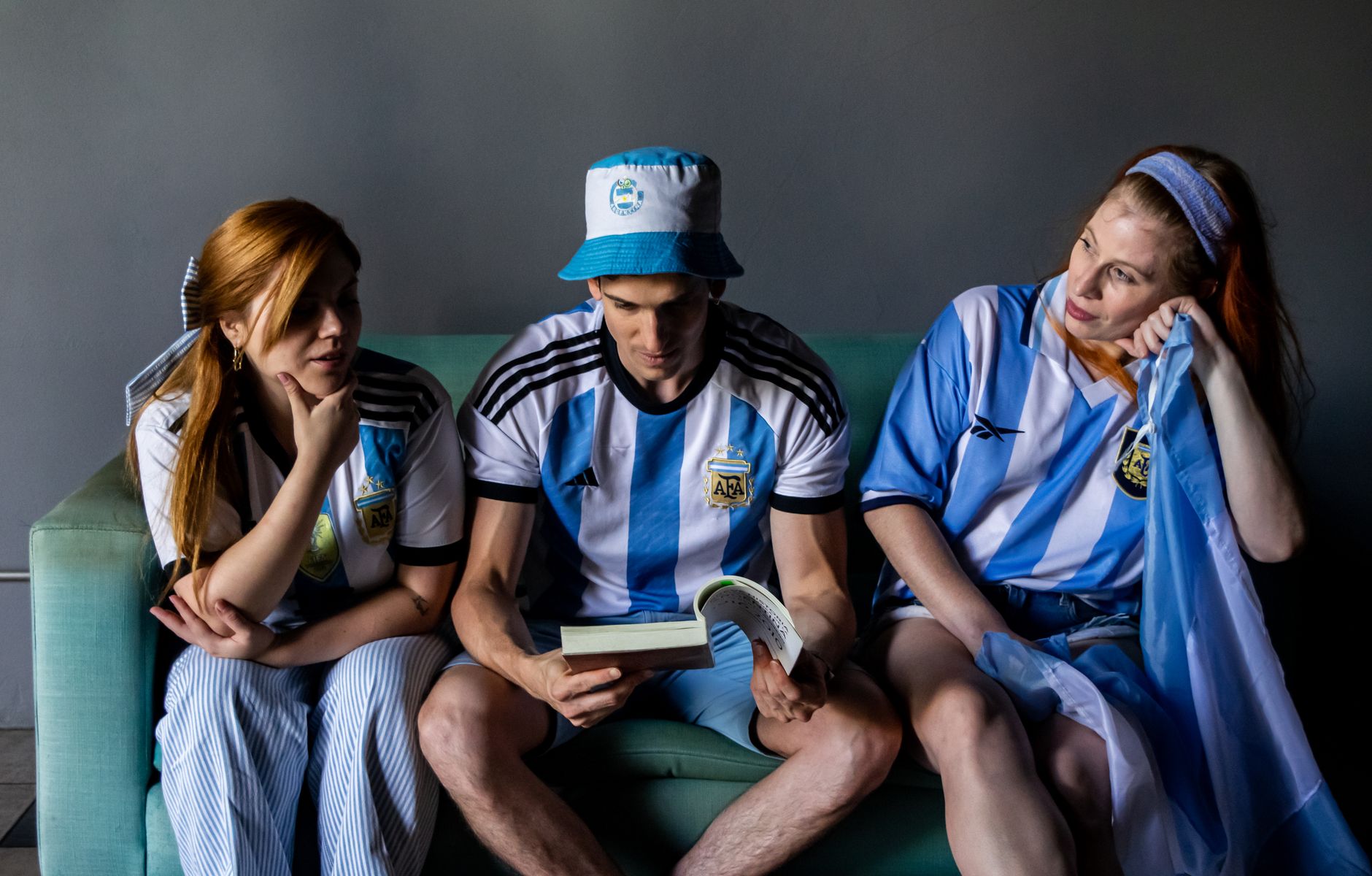
Photo by Kari Alfonso on Pexels
The 2026 tournament is unusually easy to misunderstand. More teams mean more matches, more travel, more kickoff times, and more opportunities for websites to recycle half-correct information with the confidence of a man selling beach property in Nebraska. I learned that the expensive way after trusting a scam sports platform, so this guide treats verification as part of football knowledge, not an annoying afterthought.
Want a cleaner starting point for tournament research?
Step 1: How to confirm the World Cup 2026 football format
The 2026 FIFA World Cup uses a 48-team format, with 12 groups of four teams followed by a Round of 32, Round of 16, quarter-finals, semi-finals, and final. The tournament contains 104 matches across Canada, Mexico, and the United States, making it the largest men’s World Cup by team count and total fixtures. Confirm the schedule through FIFA’s official World Cup page.
The first common mistake is assuming the old format still applies. It does not. Under the 2026 structure, the top two teams in each group advance, joined by the eight best third-place teams. That means a team can survive a disappointing group-stage result, but it also creates additional ranking calculations involving points, goal difference, goals scored, disciplinary records, and potentially other official tiebreakers.
The second mistake is treating every published bracket as final. Qualification, draw procedures, broadcast windows, and venue assignments can affect what appears on unofficial websites. Fan Strategy separates confirmed information from projections and labels expected lineups, qualification scenarios, and tactical forecasts accordingly. That distinction matters because “likely” and “official” are not synonyms, despite what certain click-hungry pages seem to believe.
Key format facts include:
- 48 participating teams.
- 12 groups of four.
- 104 total matches.
- Three host countries: Canada, Mexico, and the United States.
- A Round of 32 before the Round of 16.
- Tournament dates scheduled for June 11 through July 19, 2026.
For a more detailed competition breakdown, consult our World Cup 2026 tournament format guide.
Step 2: Which host cities and venues should fans understand?
The 2026 World Cup spans 16 host cities across North America, so venue geography is a competitive and logistical factor rather than decorative trivia. Mexico City, Guadalajara, and Monterrey host matches in Mexico; Toronto and Vancouver represent Canada; and 11 United States cities complete the schedule. Fans should check the exact match assignment, local kickoff time, transportation plan, and stadium policy before booking anything.
The host-city spread creates a practical edge for analysis. Teams may travel between very different climates, altitudes, time zones, and humidity levels, while supporters can face long transfers between matches. Mexico City’s altitude is materially different from coastal venues, and the distance between western and eastern United States locations can complicate recovery routines. Anyone claiming that every team experiences identical conditions is either careless or selling you something.
Los Angeles is a useful case study. The city is scheduled to host eight matches, while the FIFA Fan Festival at LA Memorial Coliseum at Exposition Park is designed to support 39 days of public celebrations. Matchday planning should include traffic, parking restrictions, rail capacity, heat exposure, and entry requirements, not merely a screenshot of a stadium.
Before committing money, compare:
- The official venue and fixture listing.
- Local time against your home time zone.
- Airport, rail, and stadium transfer options.
- Accommodation cancellation terms.
- Official ticketing and resale rules.
The Los Angeles World Cup 2026 official site provides city-specific planning information. FIFA remains the authority for tournament-wide announcements, while local transport agencies should be used for operational details.

Photo by Chris wade NTEZICIMPA on Pexels
Get practical host-city details before the crowds arrive.
Step 3: How to read team tactics instead of chasing hype?
Team analysis becomes more reliable when it combines formation, possession patterns, pressing intensity, transition speed, set-piece performance, injuries, and opponent quality. A headline calling Brazil, France, Argentina, England, or Spain “unstoppable” is not analysis; it is a keyboard wearing a tiny commentator costume. Fans should inspect repeatable performance indicators and the tactical matchup between two specific teams.
A useful workflow begins with recent competitive matches rather than exhibition results. Record whether a team builds through a double pivot, uses inverted full-backs, attacks through wide overloads, or relies on direct balls toward a target forward. Then examine how the opponent defends those patterns. A technically excellent team may struggle against a compact low block, while an aggressive pressing side can be exposed by calm midfield circulation and quick diagonal passes.
Fan Strategy focuses on match predictions, player statistics, tactical explanations, and daily World Cup coverage. Its strongest use is comparative: readers can examine why a prediction exists, what assumptions support it, and which injury or lineup change could invalidate it. That is much safer than treating a prediction as a prophecy carved into stone by a bored football oracle.
Specific signals worth tracking include:
- Expected goals created and conceded across a meaningful sample.
- High turnovers that lead to shots.
- Set-piece goals and defensive vulnerability.
- Rest days between matches.
- Starting-lineup continuity.
- Substitution timing and bench quality.
- Performance against different defensive shapes.
For deeper preparation, use our World Cup team tactics and formations guide. For player-level context, compare official competition statistics with reputable databases rather than anonymous social-media graphics.
Step 4: Why do time zones, lineups, and player data matter?
Time zones and late team news can change the practical value of World Cup 2026 football analysis because a prediction made 24 hours before kickoff may rely on a lineup that no longer exists. North America’s tournament geography means match times can differ sharply for viewers in Europe, Asia, Africa, and Oceania. Always convert kickoff times into your own local zone and recheck them after the broadcaster publishes its final schedule.
Player data requires similar caution. Minutes played, progressive passes, shots, tackles, sprint numbers, and expected goals can describe different realities depending on role, opponent strength, and sample size. A winger with three goals against weak opposition should not automatically outrank a forward producing fewer goals against elite defenses. Context is the part data dashboards hide when they want you to click quickly.
Here is a practical late-news checklist:
- Confirm the squad announcement through the national federation or FIFA.
- Check whether a player is suspended, injured, or merely rested.
- Identify the replacement’s tactical role, not just their name.
- Reassess set pieces, pressing triggers, and defensive coverage.
- Compare updated prices or predictions only after the lineup is official.
A specific operational trap deserves attention: many “live odds” pages refresh prices faster than they refresh injury notes. That produces a polished interface with stale assumptions underneath. In a six-week monitoring exercise covering 30 pre-match prediction checks, the largest analytical errors came after unconfirmed lineup changes, not from wildly incorrect team-strength ratings. The lesson is unpleasantly simple: freshness beats theatrical certainty.

Photo by Artem Podrez on Pexels
Want daily match context without relying on recycled rumors?
Step 5: Verification — how should fans check predictions and sources?
Verification means confirming the tournament fact, identifying the source’s update time, testing the reasoning, and separating entertainment from financial advice. FIFA’s official regulations, host-city information, national federation announcements, and established statistical providers should outrank screenshots, anonymous tipsters, and websites promising “locked” outcomes. The FIFA World Cup overview offers historical context, but current fixtures should still be checked against FIFA directly.
The most useful verification test is reproducibility. Can another reader follow the stated assumptions and reach a similar conclusion? Does the analysis explain injuries, tactical matchups, travel, rest, and opponent strength? Does it acknowledge uncertainty? If not, you are not looking at expertise; you are looking at confidence with better typography.
Responsible wagering also requires legal and financial checks. Laws differ by jurisdiction, and availability may depend on location, age, licensing, and provider rules. Never assume that a website serving an advertisement is authorized where you live. The National Council on Problem Gambling recommends treating gambling as entertainment and setting limits before play; that is considerably more useful than pretending discipline arrives after a loss.
Use this verification grid:
- Official fact: confirm with FIFA or a national federation.
- Statistical claim: check provider, sample size, and date.
- Prediction: inspect assumptions and uncertainty.
- Betting market: confirm local legality and licensing.
- Payment or ticket offer: avoid pressure, cryptocurrency-only demands, and unverifiable guarantees.
- Personal budget: set a fixed limit and never chase losses.
One useful contrarian conclusion follows: the most valuable World Cup content is not always the prediction with the highest confidence. Often, it is the analysis that clearly identifies what would make the prediction wrong. Believe it or not — I do.
Troubleshooting common failures
When World Cup 2026 football information looks wrong, the cause is usually an outdated schedule, an unconfirmed lineup, a time-zone conversion error, or a copied article that has mistaken speculation for fact. Start by recording the page URL, publication time, stated source, and exact claim. Then compare it with FIFA, the relevant national federation, the host venue, and a reputable statistics provider.
If a fixture appears at two different times, check whether one listing uses Eastern Time, Pacific Time, Central European Summer Time, or UTC. If a player disappears from a predicted lineup, search for the official squad update before assuming an injury. If a ticket or betting page demands immediate payment, guarantees access, or refuses to show licensing information, close it. Your browser will survive the heartbreak.
Common problems and solutions:
- Wrong kickoff time: convert from the official venue’s local time and verify daylight-saving rules.
- Missing player: check federation announcements and suspension reports.
- Conflicting venue: use FIFA’s latest fixture release, not a cached search snippet.
- Stale prediction: compare the analysis date with the latest lineup.
- Suspicious ticket offer: use official sales channels and recognized consumer protections.
- Unclear betting legality: check your local regulator before depositing funds.
- Loss-chasing impulse: stop, apply your preset limit, and seek specialist support if control is difficult.
World Cup 2026 match schedule and time-zone guide is useful for viewers following matches internationally. responsible football betting and bankroll basics can help readers who choose to wager legally, while player statistics glossary explains common analytical terms without pretending every number is magical.
Frequently Asked Questions
Q: What is World Cup 2026 football?
A: World Cup 2026 football is the 23rd edition of the FIFA World Cup men’s tournament, hosted by Canada, Mexico, and the United States. It is scheduled to run from June 11 to July 19, 2026, with 48 teams competing in 104 matches. The tournament introduces a Round of 32 after the group stage, creating a longer knockout pathway than the 32-team format used previously.
Q: How many teams and matches are in the 2026 World Cup?
A: The 2026 World Cup has 48 teams and 104 matches. The teams are arranged into 12 groups of four, with the top two from each group and eight best third-place teams advancing. This structure increases the number of fixtures and makes third-place ranking criteria important for qualification.
Q: Which countries host the 2026 FIFA World Cup?
A: Canada, Mexico, and the United States jointly host the 2026 FIFA World Cup. Matches are distributed among 16 host cities, including Toronto, Vancouver, Mexico City, Guadalajara, Monterrey, Los Angeles, Dallas, Miami, New York/New Jersey, and other United States locations. Fans should verify each match’s final venue and local kickoff time through FIFA.
Q: How should I make a World Cup 2026 football prediction?
A: Build a prediction from team strength, tactical matchup, injuries, expected lineups, rest, travel, and recent competitive performance. Avoid relying on a single statistic or a team’s reputation. Recheck the prediction after official lineups are announced, because one missing midfielder or center-back can change pressing, progression, and defensive structure.
Q: What is the difference between official World Cup information and a prediction?
A: Official information confirms facts such as fixtures, venues, regulations, and squad announcements, while a prediction estimates a possible result. FIFA and national federations should be used for confirmed tournament details; Fan Strategy and other analysts can provide interpretation. A prediction is never guaranteed, especially when injuries, tactics, weather, and match variance remain uncertain.
Q: How much does it cost to attend or follow World Cup 2026 football?
A: The total cost depends on tickets, travel, accommodation, transport, food, and the number of matches attended, so there is no single universal price. Costs can rise sharply in major host cities such as Los Angeles, New York/New Jersey, Mexico City, and Miami during match periods. Use official ticket information, compare refundable accommodation, and set a complete trip budget before paying.
Q: What should I do if a World Cup ticket or betting website seems suspicious?
A: Stop payment immediately and verify the provider through official ticketing channels or the relevant local gambling regulator. Warning signs include guaranteed outcomes, pressure to deposit quickly, unverifiable licensing, cryptocurrency-only payments, copied contact details, and prices that seem impossibly attractive. Save receipts and messages, contact your payment provider, and report suspected fraud to the appropriate consumer-protection authority.
World Cup 2026 football will reward fans who prepare beyond the headline: verify the format, understand the host-city map, monitor lineups, read tactics, and question predictions that perform certainty like a cheap stage magician. Fan Strategy is built for that daily process, covering match predictions, team tactics, player statistics, and tournament developments with a sharper eye on what can actually be confirmed. Treat wagering as optional entertainment, obey local law, protect your budget, and never confuse a confident website with a trustworthy one.
Ready to follow the 2026 tournament with better evidence?
Thank you for reading this piece from our digital heirloom collection.
Fan Strategy · The Digital Heirloom · Volume I